

Where Two Bodies Meet
Artists: Ally Zlatar & Ayesha Mubarak Ali
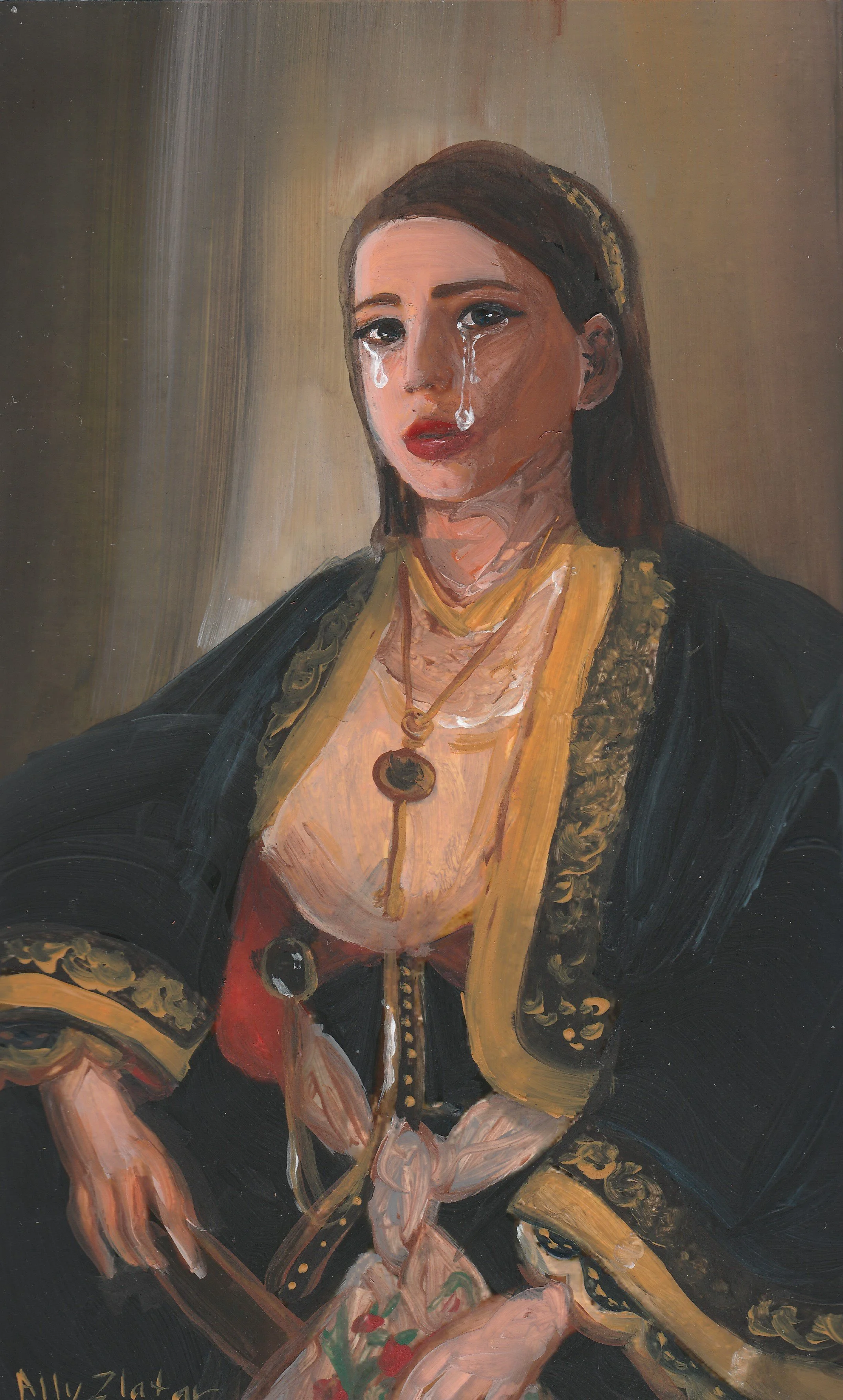
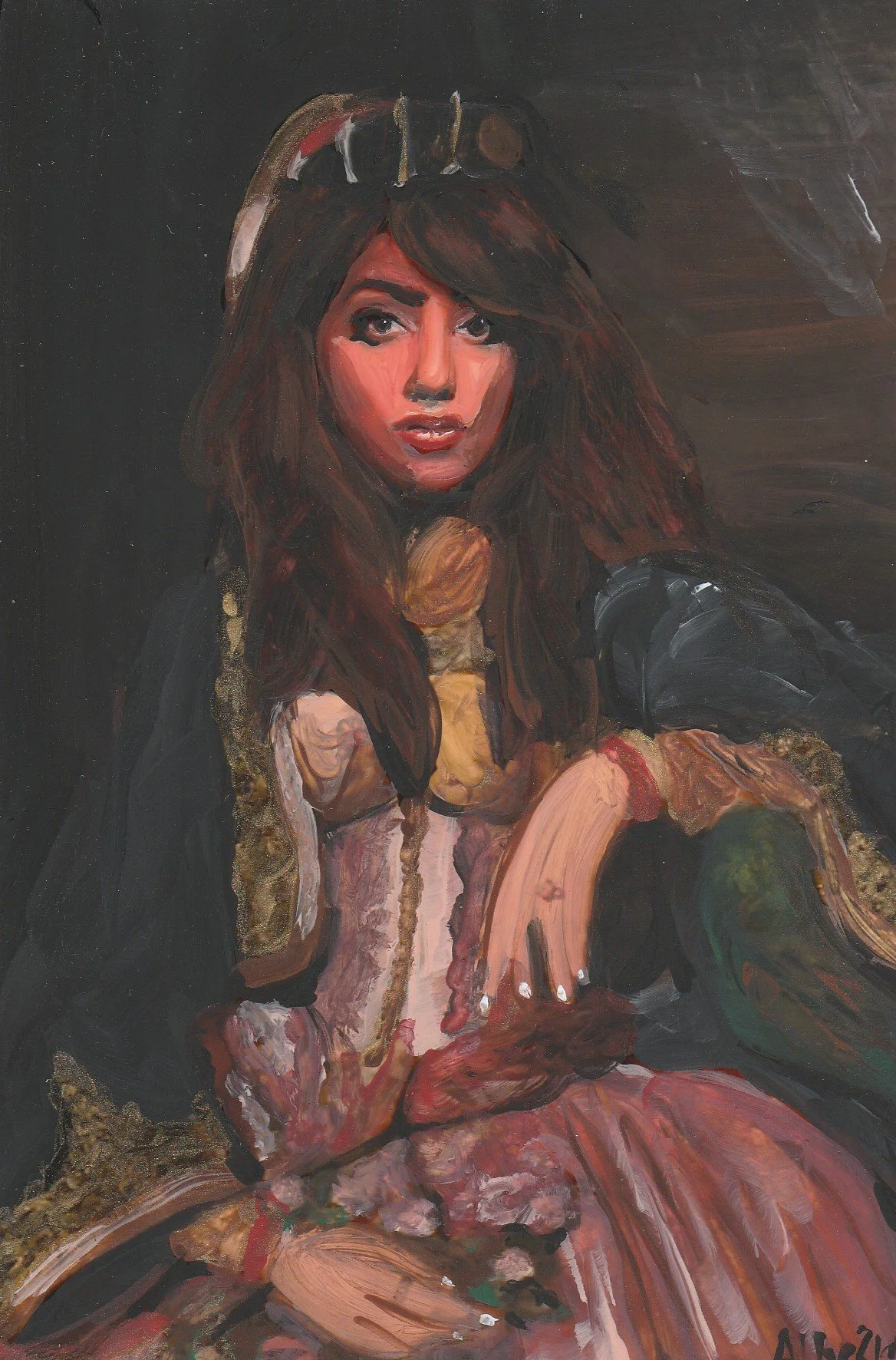
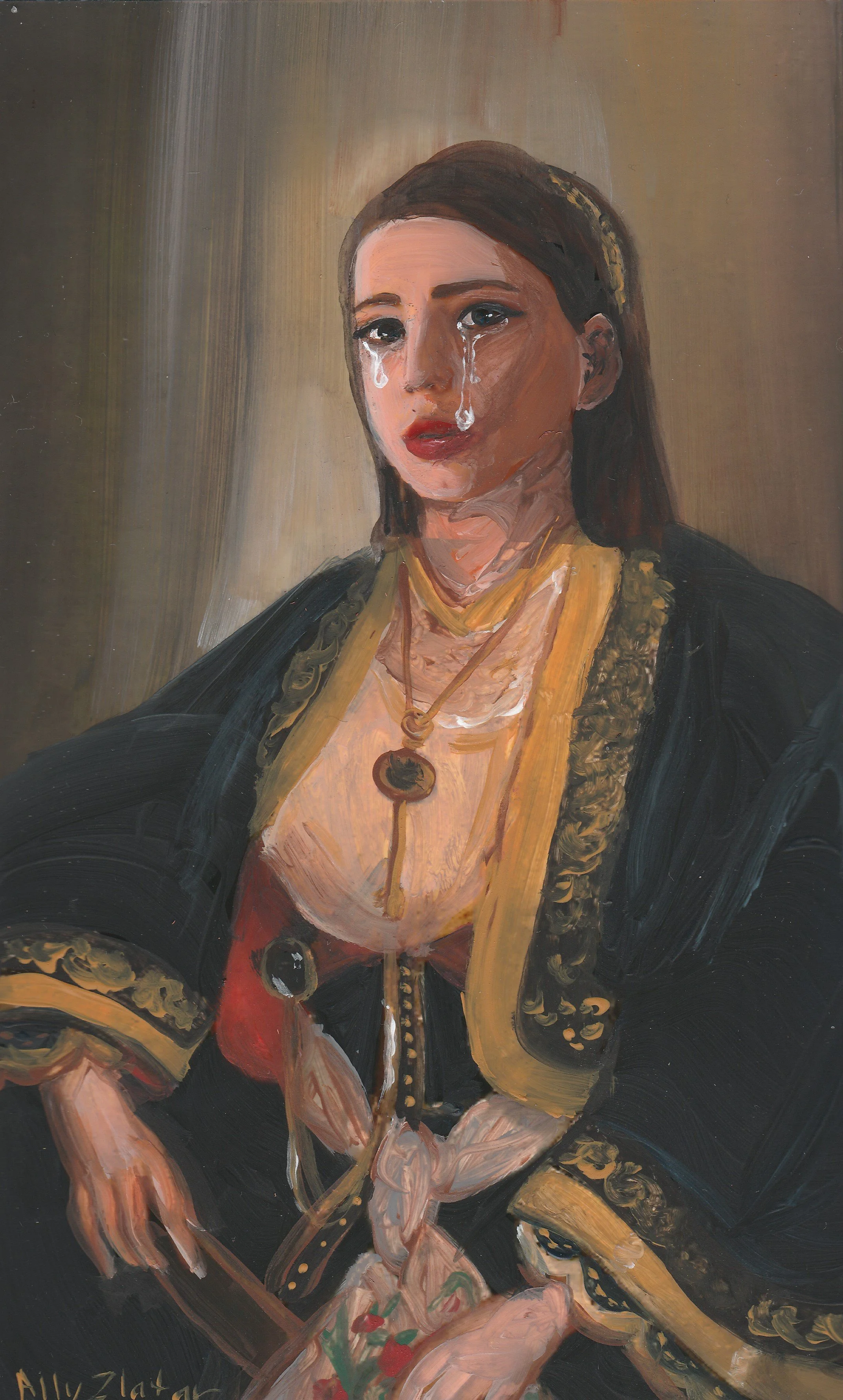
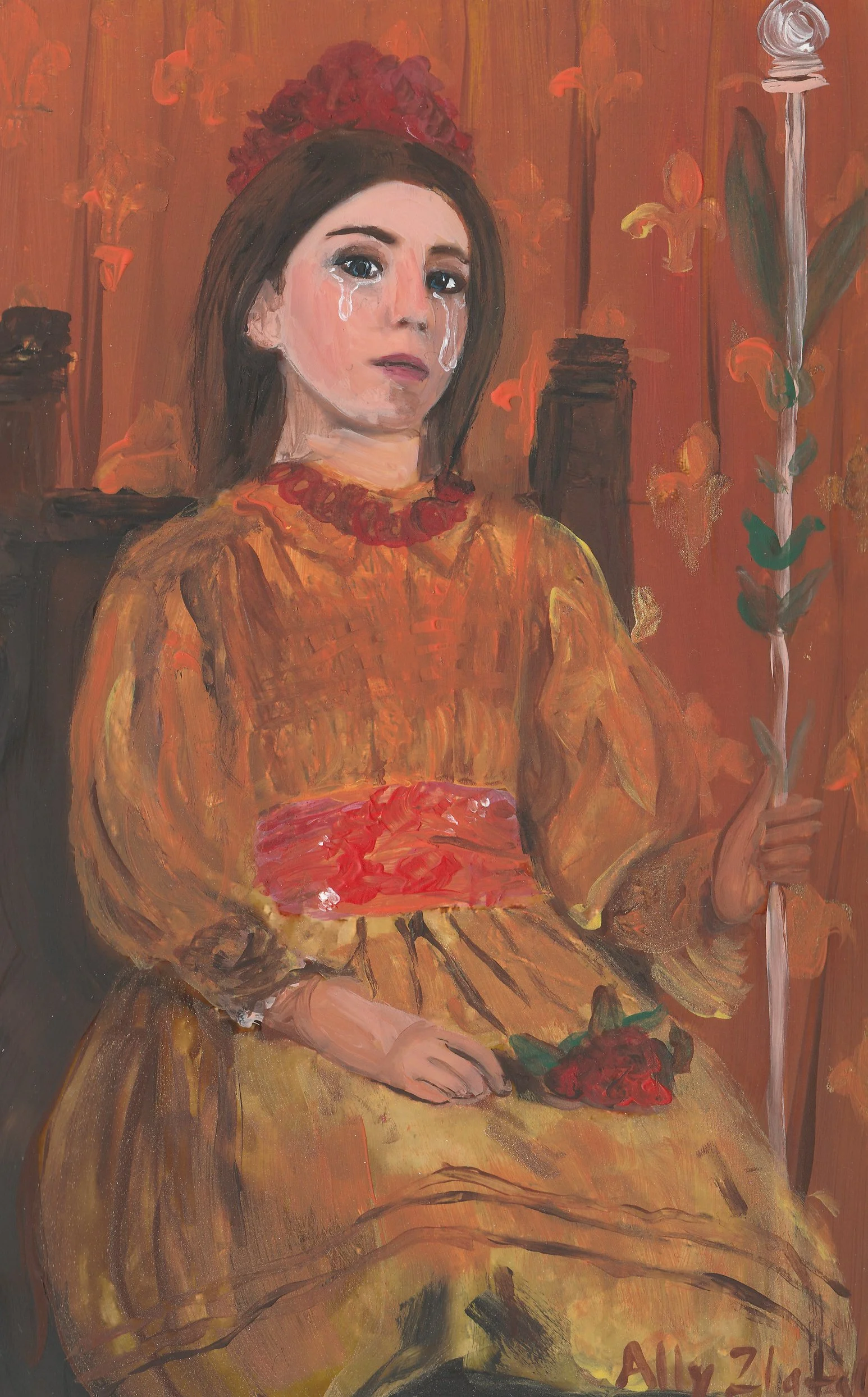
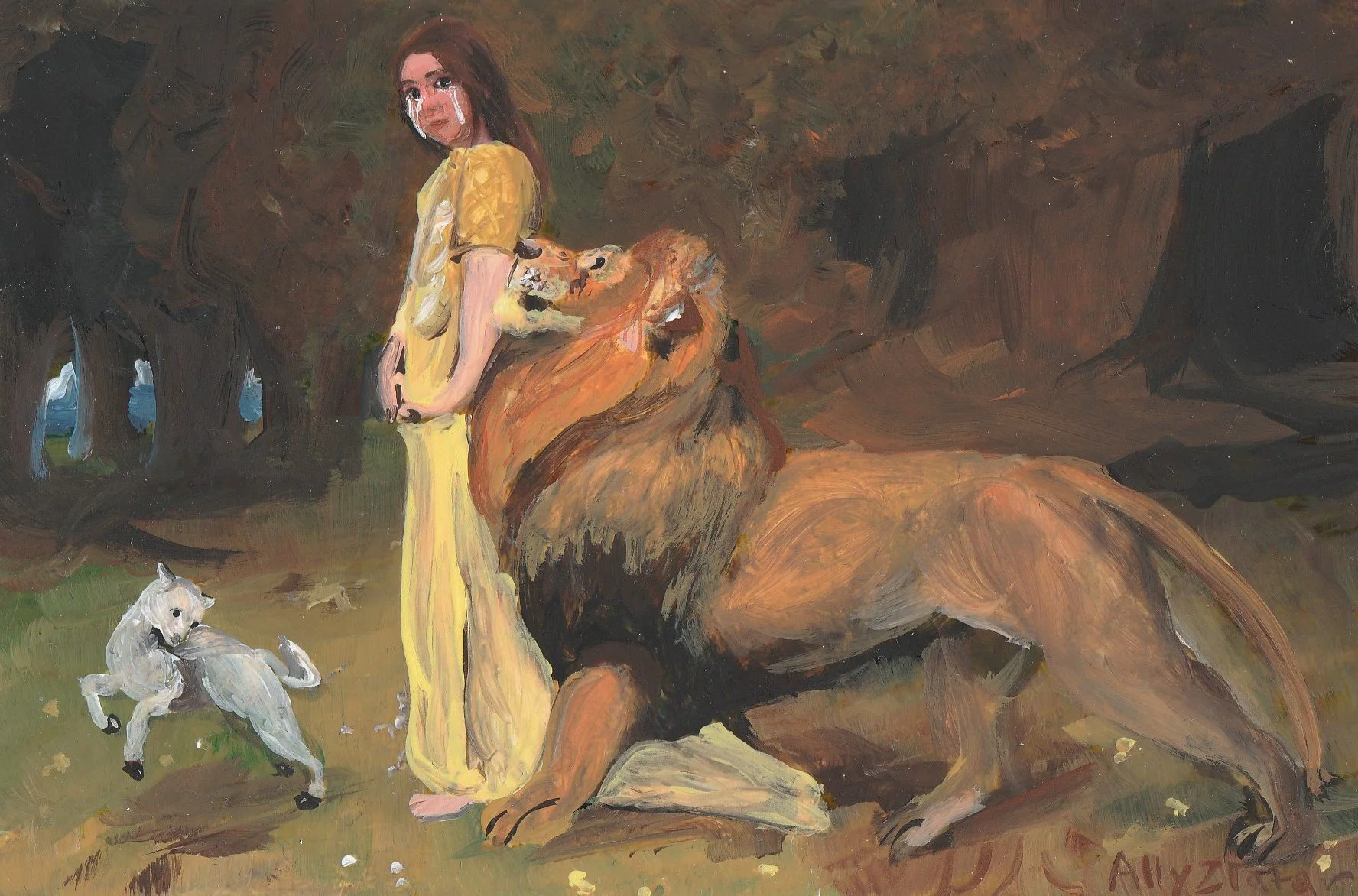
a serbian renaissance (2/5), Ally Zlatar 2021
The 2021 North Louisiana Residency ran from February 8th until April 2nd. The residency provided a space for Zlatar and Ali to ignite this collaboration and they came together and collaborated as a pair on this new work. The Ross Lynn Charitable Foundation and the North Central Louisiana Arts Council offered this because, in this time of uncertainty and upheaval, we are remembering that art has always allowed humans to understand and explain both our inner and outer worlds, bringing to life realities in a tangible substance that can be shared, retold, and reinterpreted in unending ways.
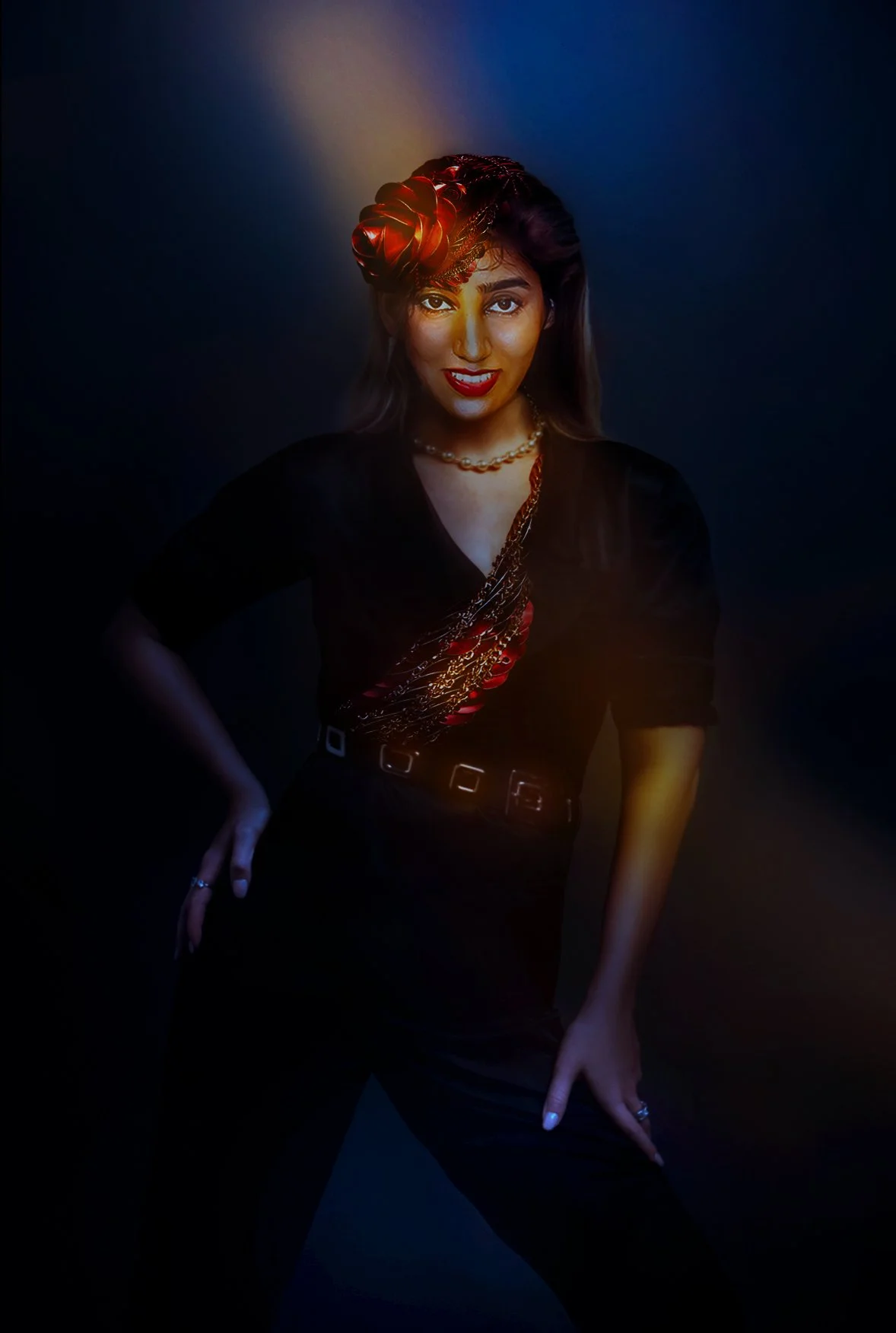
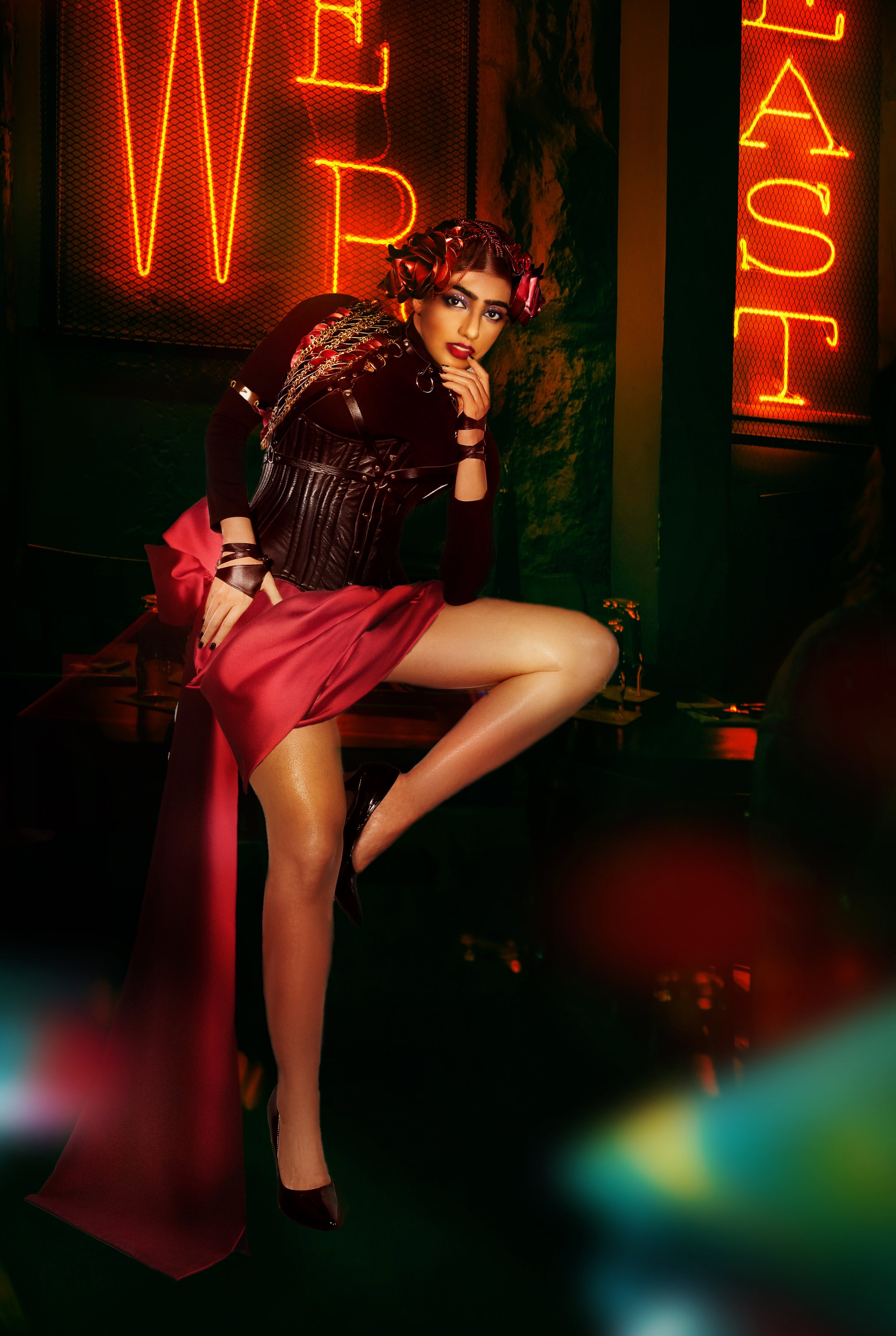
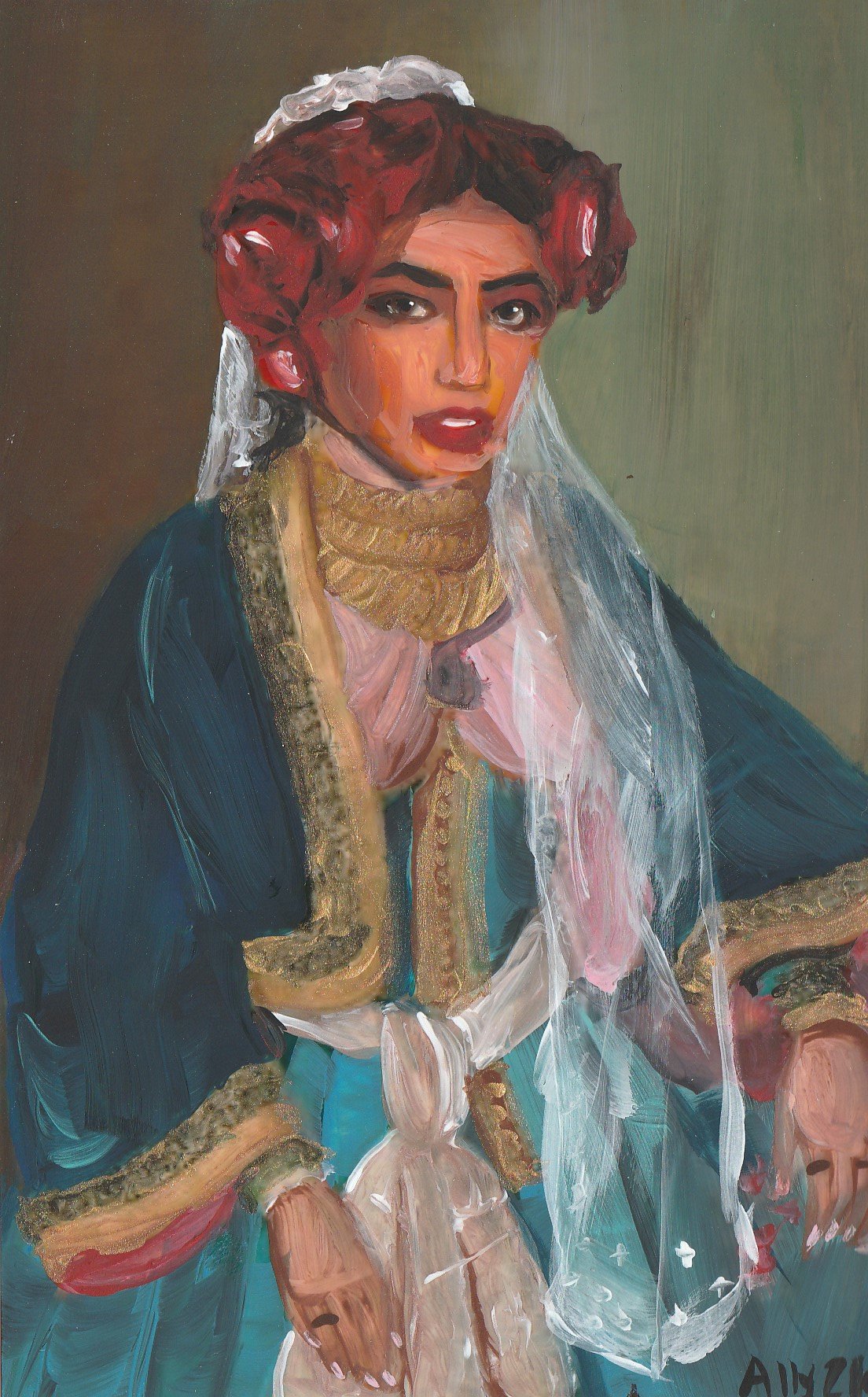
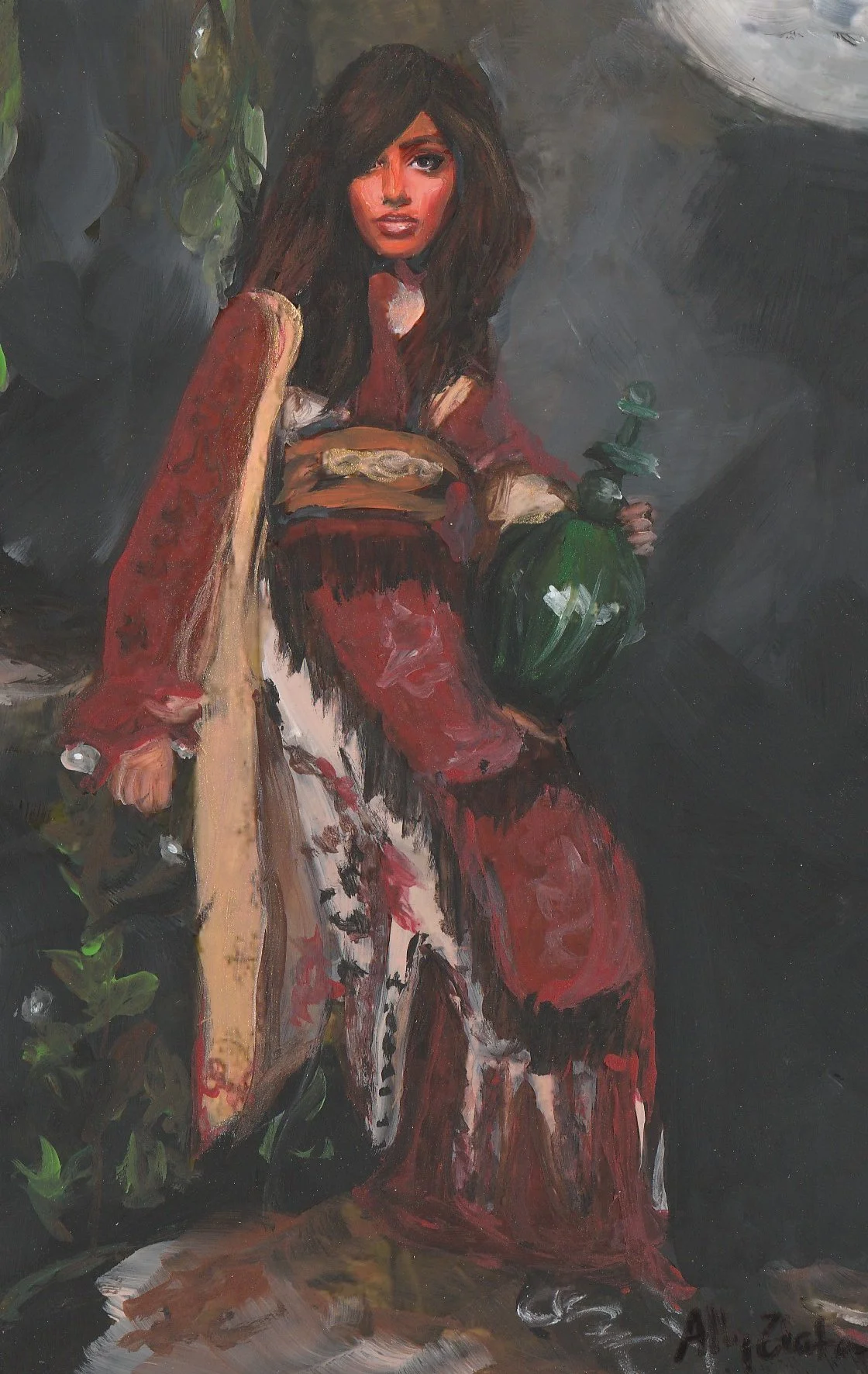
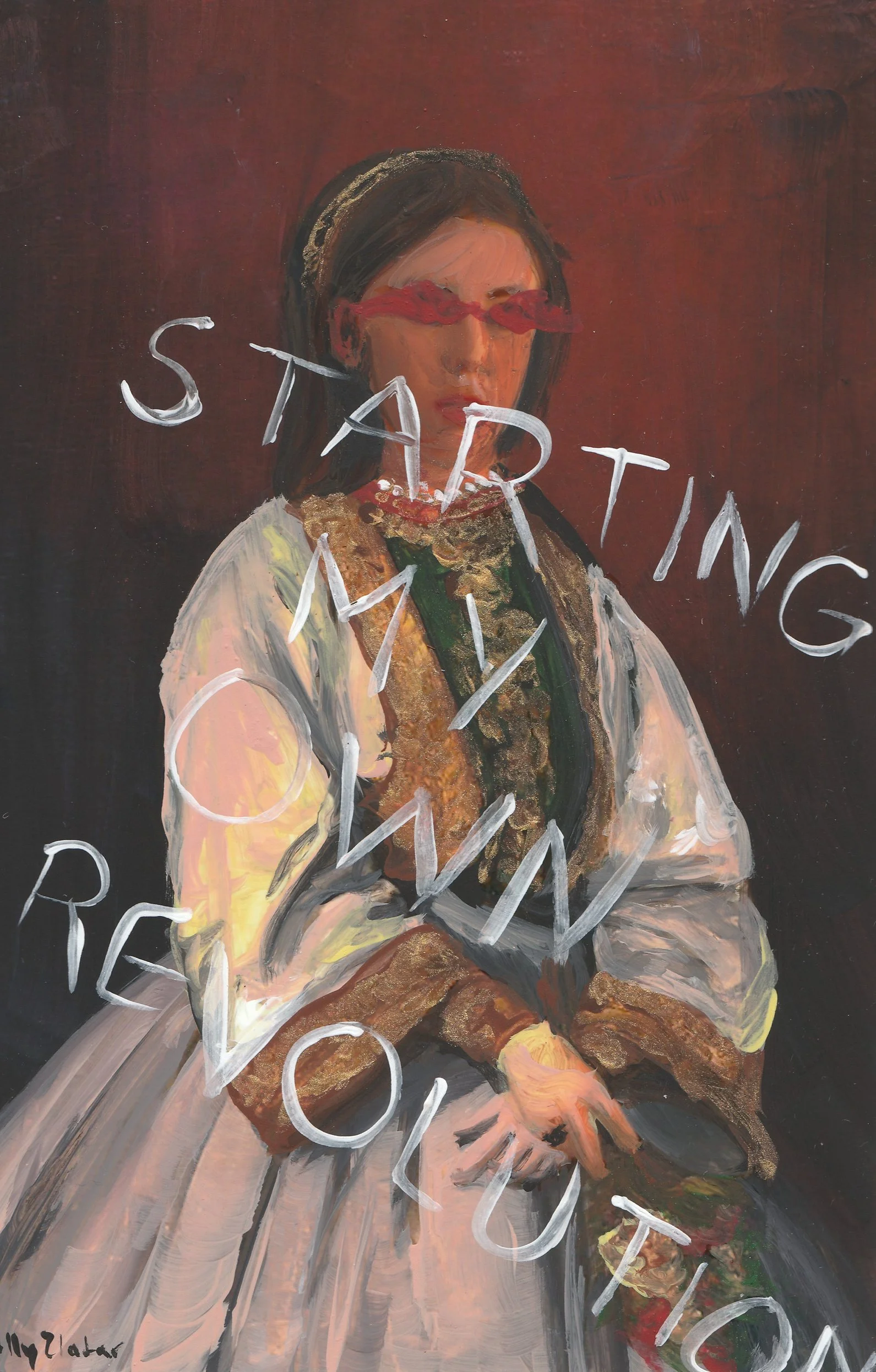
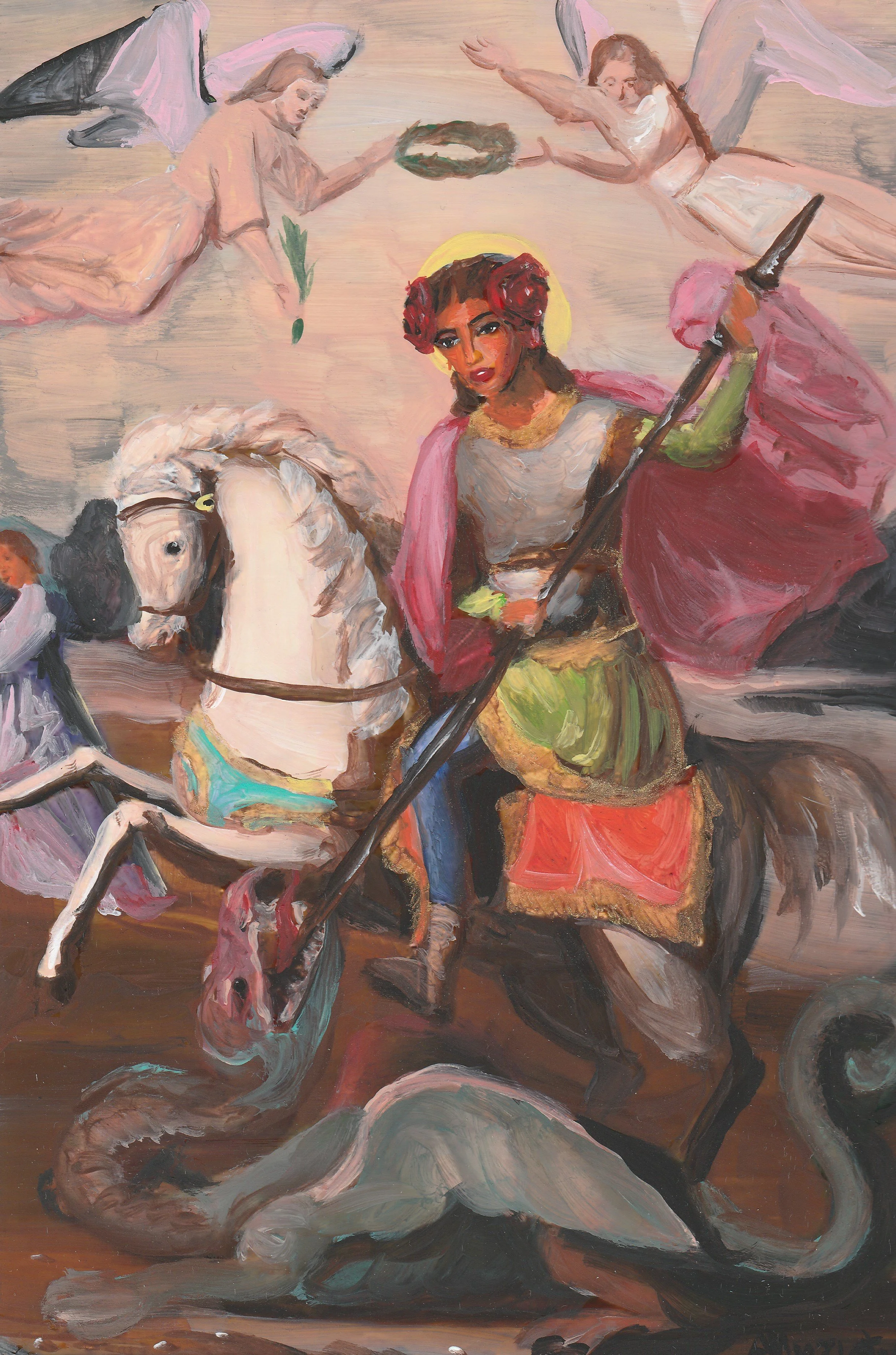
This residency experience led to the creation of this body of work. We started off with a cross-cultural collaboration where we imposed our cultures on each other. From there Zlatar explored her Serbian heritage and fell in love with classic Serbian Art all over again. In this project, Zlatar embraced her historic culture and rendered her series "A Serbian Renaissance" which is a series of acrylic paintings with new narratives of the cross-cultural expressions and body representation. She imposed her partner Ayesha and herself onto these paintings from antiquity to explore cultural identity through body embodiment. Ali decided to use fabrication techniques and 3D Modelling to combine photos to create new narratives with hyper-real portraits showcasing herself and Zlatar as the protagonists. Ali named her series as "A Cultural Escape, from Pakistan!"
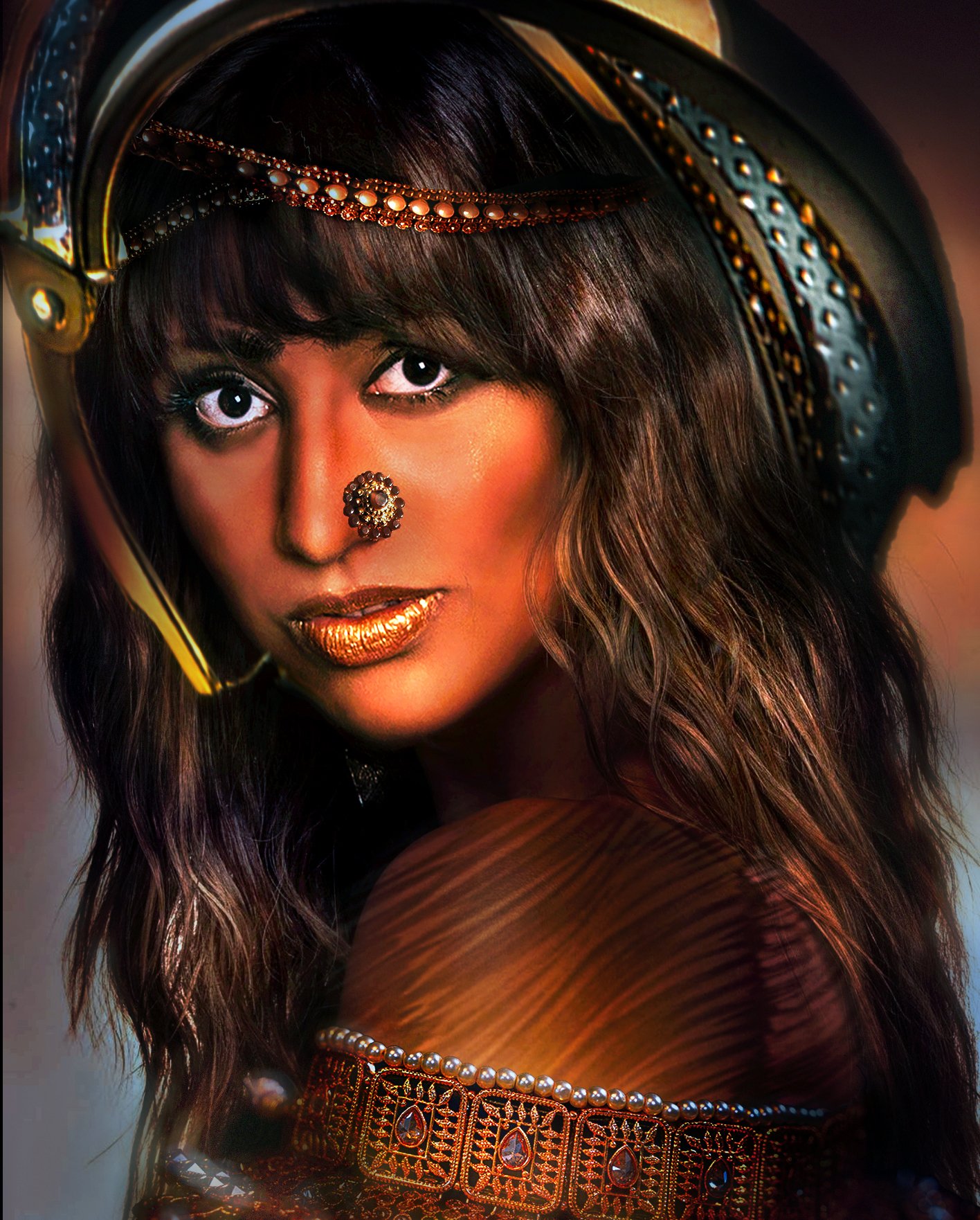
Confused Existence, Ayesha Ali 2021
The aim of this project was to create constructive dialogues about our personal cultures with each other, create a dialogue between Serbian and Pakistani traditions for an opportunity to deconstruct these narratives in a new way.
Considering both Ally and Ayesha are portrait artists and have previously worked commercially as models too, it became interesting to see how those images could become a way of communicating ideas and creating new stories. Ally works with acrylic medium and Ayesha works with Digital and 3D Modelling to create her portraits so both of them utilized this virtual collaboration as an opportunity to create new contemporary narratives that are not necessarily relevant to one region alone. The process, therefore, involved exchanging artist inspirations, high-resolution images, shoot content, and traditional motifs images. Both the artists ended up creating their own versions of combined histories, exhibited in their separate series of stills, featuring the other. The thought of working with the same identity of portrait artists but utilizing different mediums to integrate the cross-cultural exchange of ideas was quite exciting a way to exchange information virtually and research new cultural meanings to produce work.
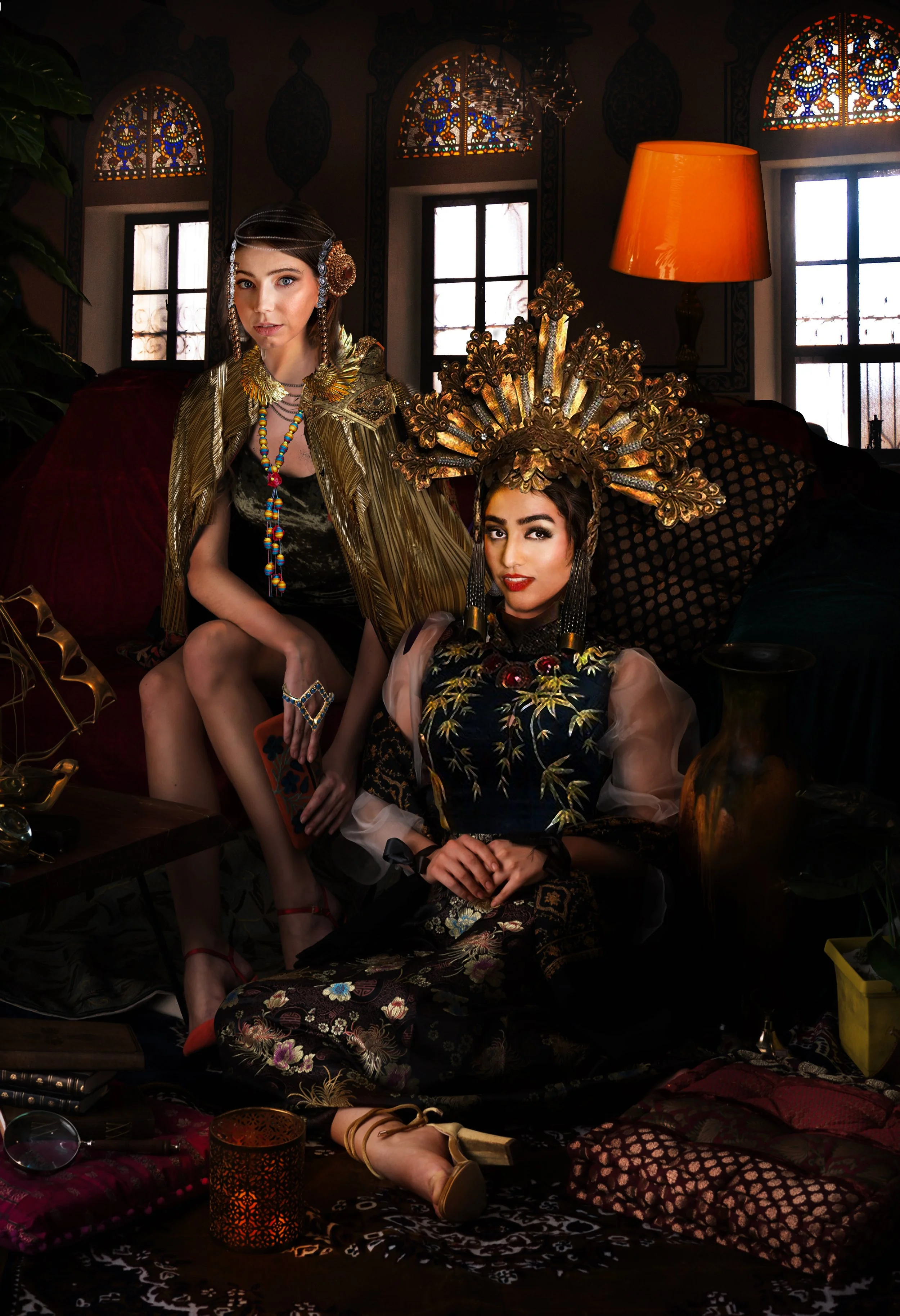
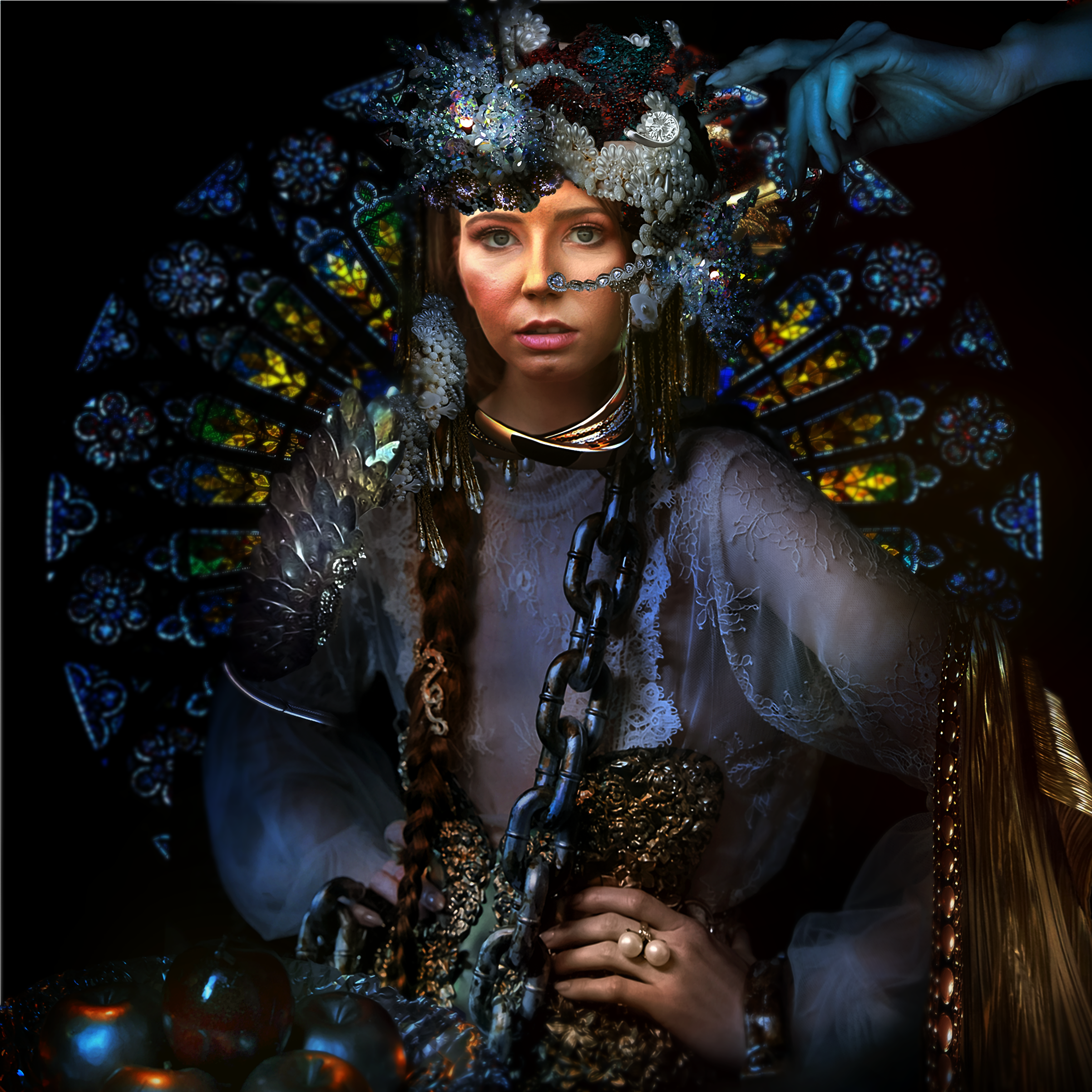
A Cultural Escape, from Pakistan! | Ayesha Mubarak Ali
My visuals propose a dramatic setting, structured by a non-hierarchical scenic inter-dependence, brought together figuratively by combining information from personal archives and staged shoots along with symbology that can aid new narratives, generating a space that looks like a theatre stage. The general tone of the work moves between a sense of the grotesque and the traditional, real and unreal. I experimented with elements of physical comedy and characteristics of the romantic comic sublime. Through the mixture of costumes with historical architecture and applied meanings, I aimed to create a lofty and laughable tone for characters i and Ally played in my art. I tried to ground the dialogue between the use of motifs of the familiar and figuration of the imagined, establishing friction between visual registers of the uncanny and the experienced reality.
Created over a period of time with no planned outcome, the work is able to reflect the location of its production and/or exhibition and receive thoughts and influences gained over the time of its making from pixel-based information, pigments, paint, and software translated in layers upon layers. This non-linear research was centered around the idea that physical experiences exist in collaboration with a network of virtual and imaginative sources resulting in a partly fictional reality I was intrigued to work with Pakistani culture and traditional attires as a starting point and then jumped to foreign elements and mixed symbols that could create a realm of meta-fiction, such as the use of the image within the image, using a real model with 3D costume, and the use of a fictional artists/models, almost in the mode of a 'dramatized narrator' creating a stage to design and perform, to model and be modeled in this multi-dimension façade.
Through these visuals, I wanted to address, in an allegorizing way, different extreme ethic scenarios, such as the role I would take in a bar, in bold dressing, but then how would I personify in a scenario where a model exist from the other part of the world, besides me? Nonetheless, the use of humor strategies in the images wasn't intended towards presenting the content in a type of selfparodic operation but rather, the irony was supposed to hint at our own existential circumstances and contradictions among the shared culture.
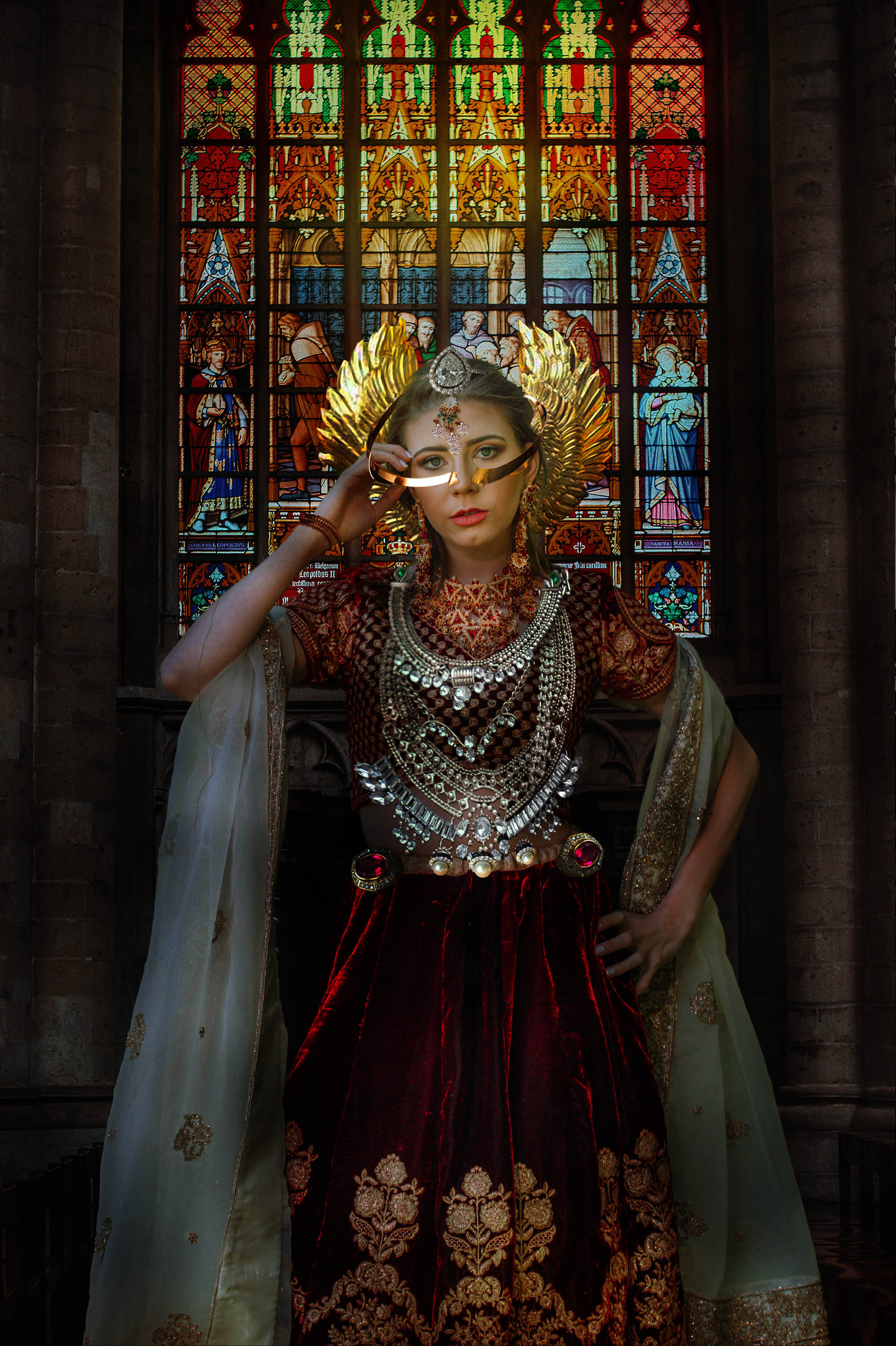
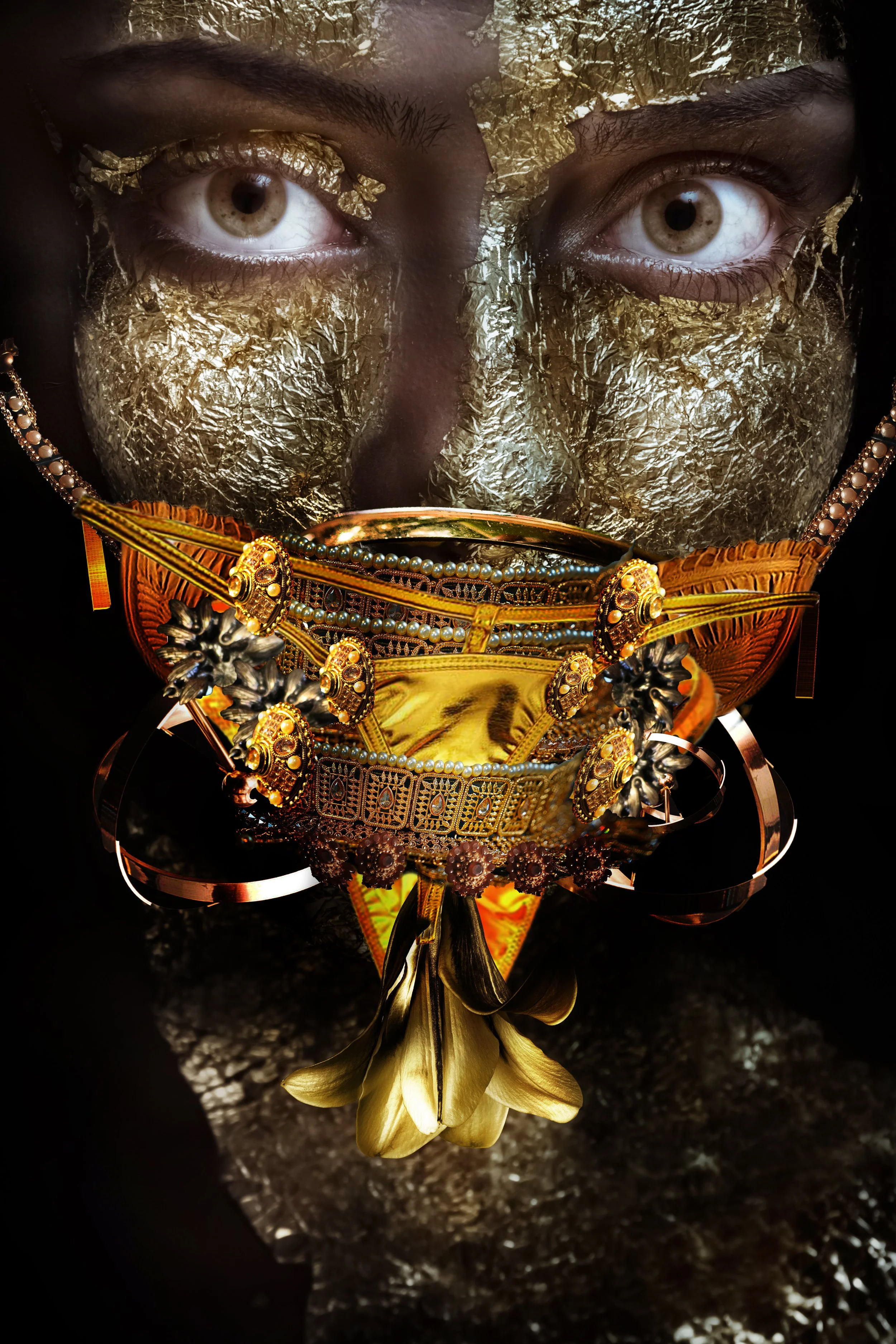
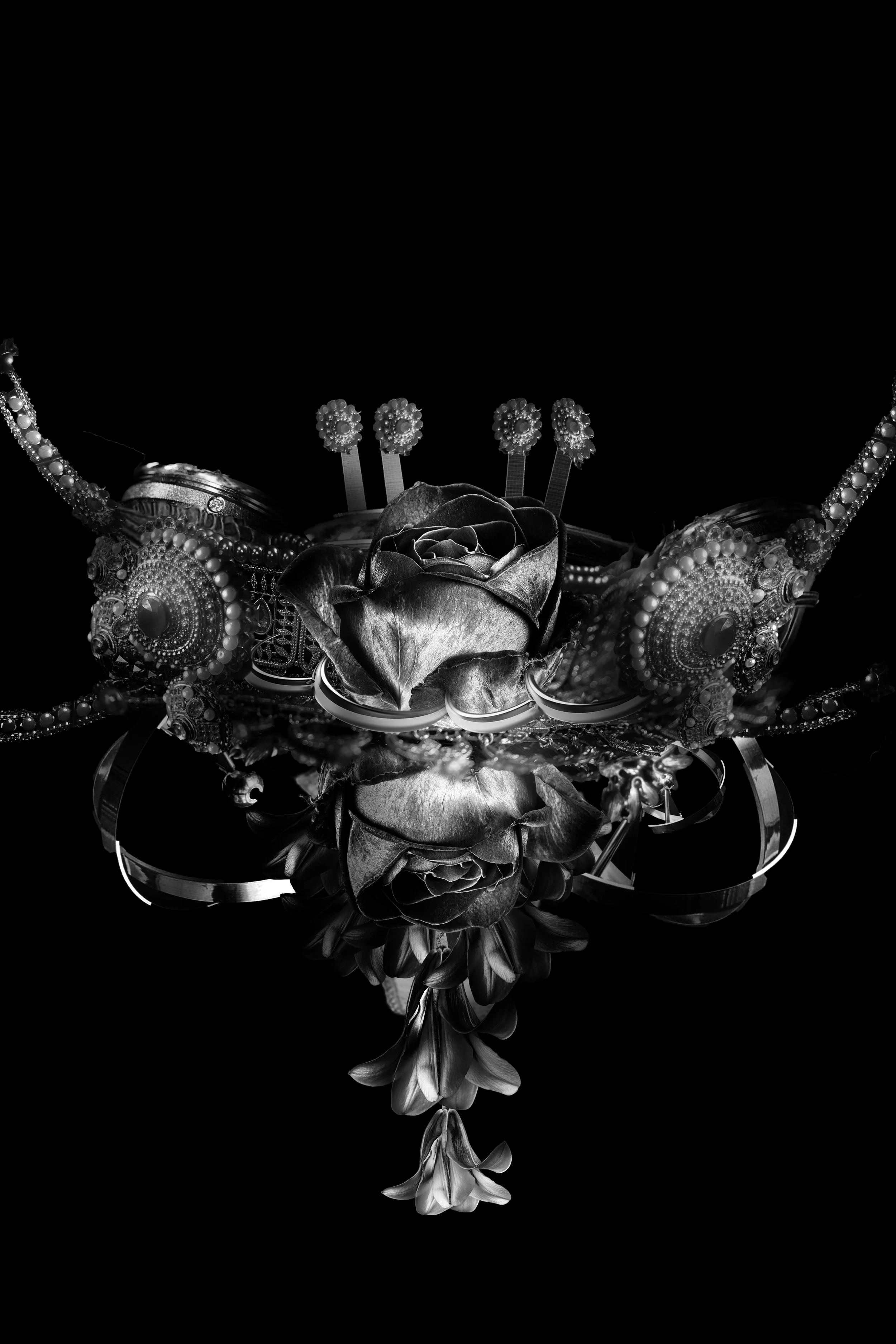
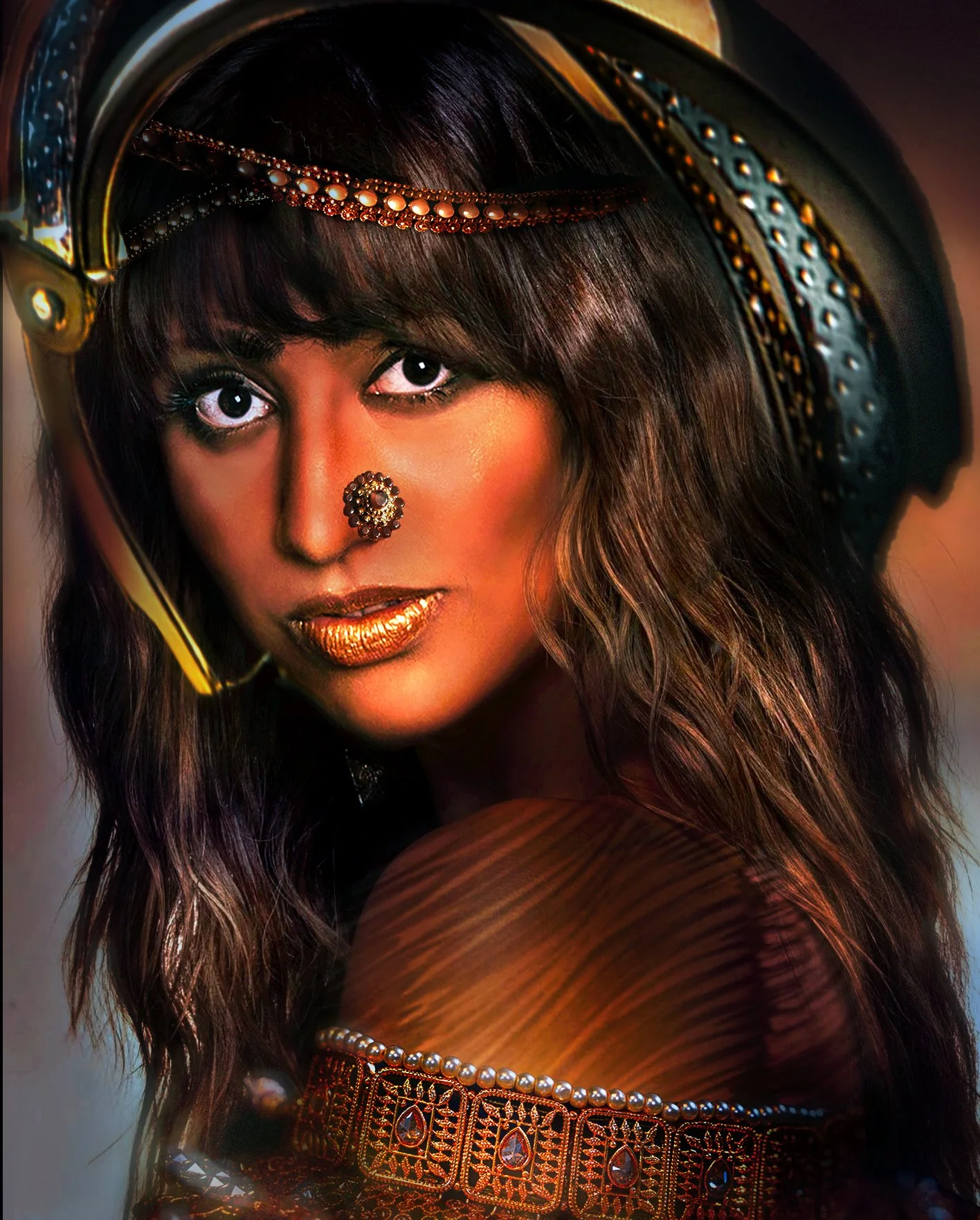
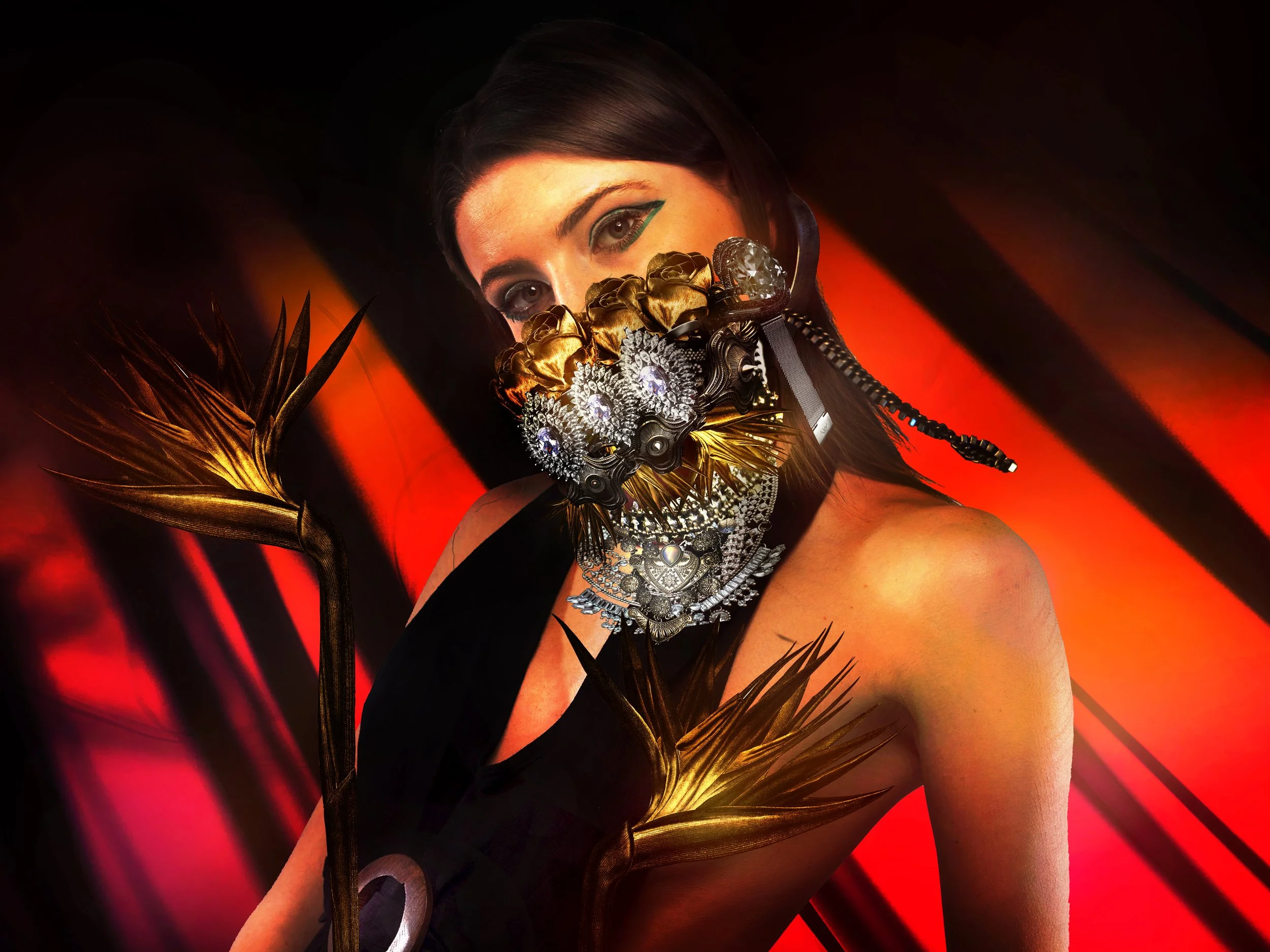
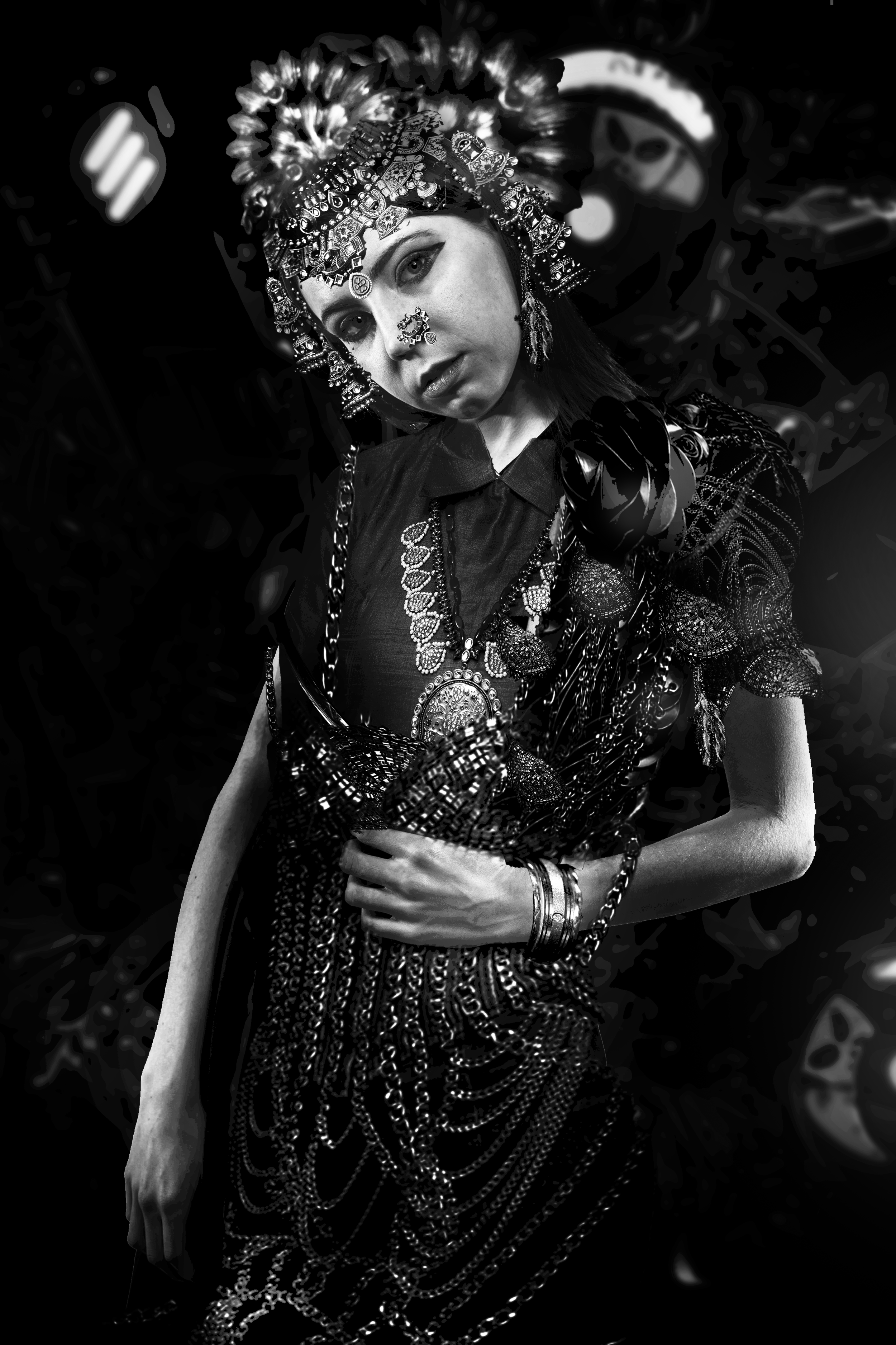
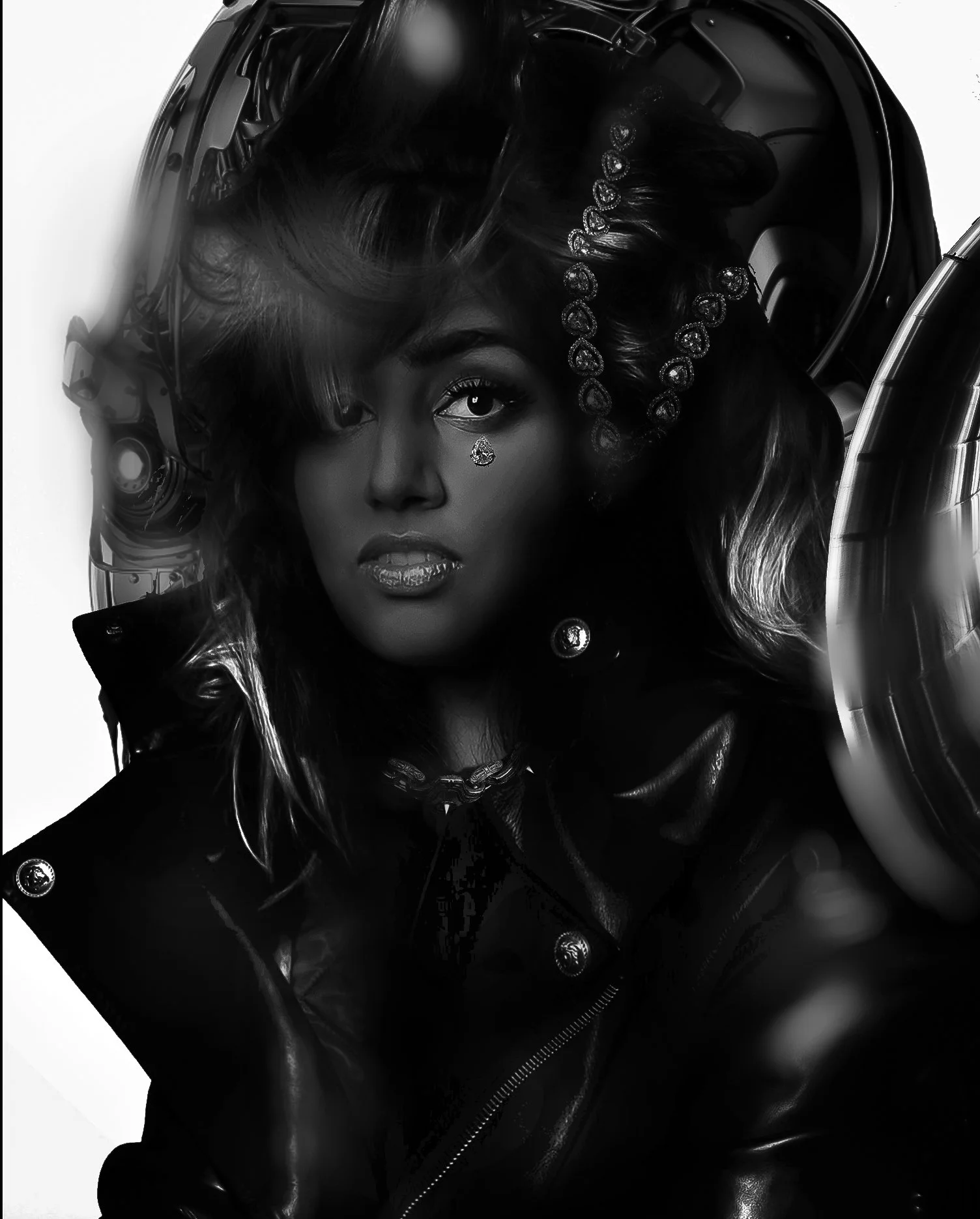
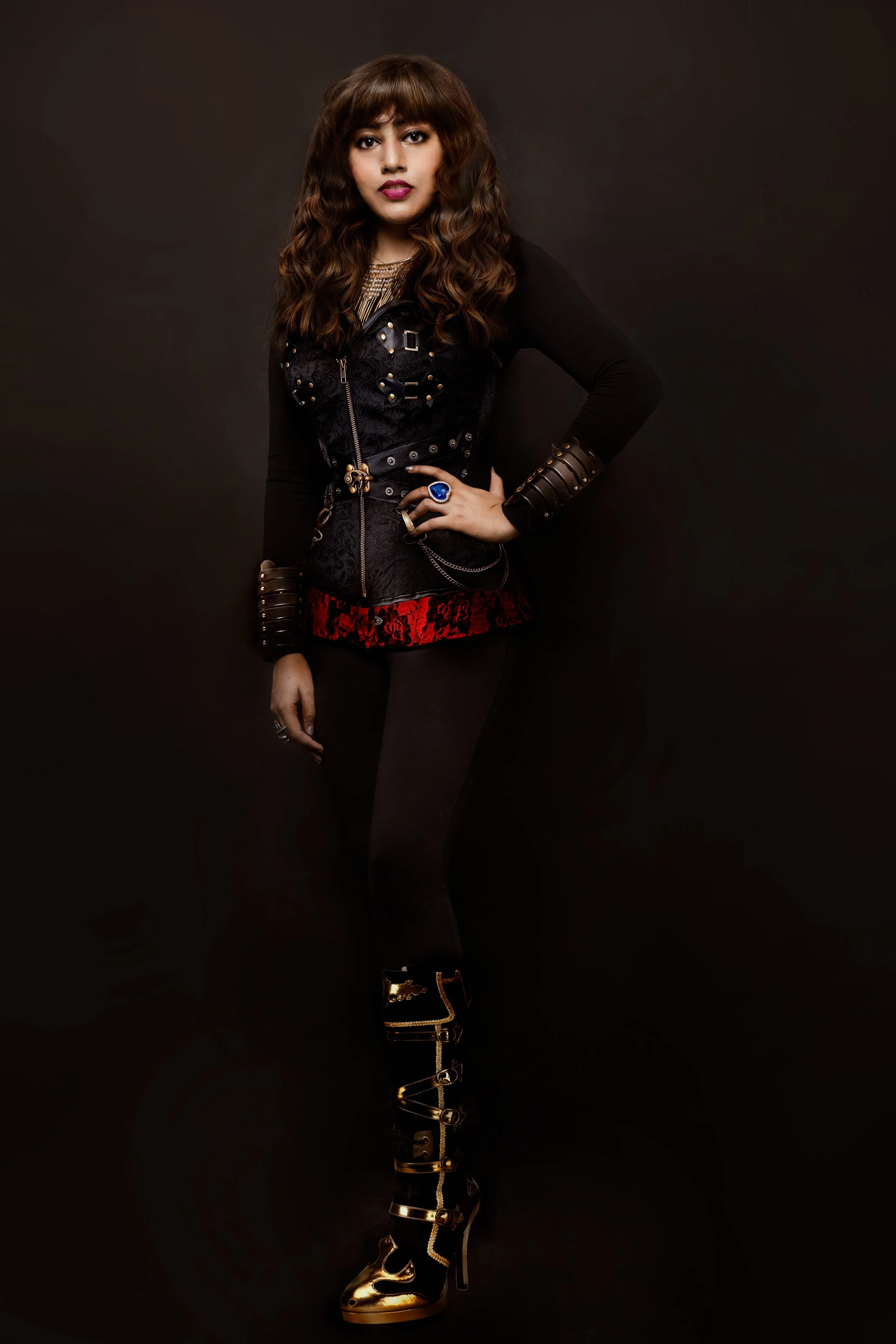
A Serbian Renaissance | Ally Zlatar
In this project, Zlatar embraced her historic culture and rendered her series "A Serbian Renaissance" which is a series of acrylic paintings with new narratives of the cross-cultural expressions and body representation. She imposed her partner Ayesha and herself onto these paintings from antiquity to explore cultural identity through body embodiment.
The Artists and their Reflections
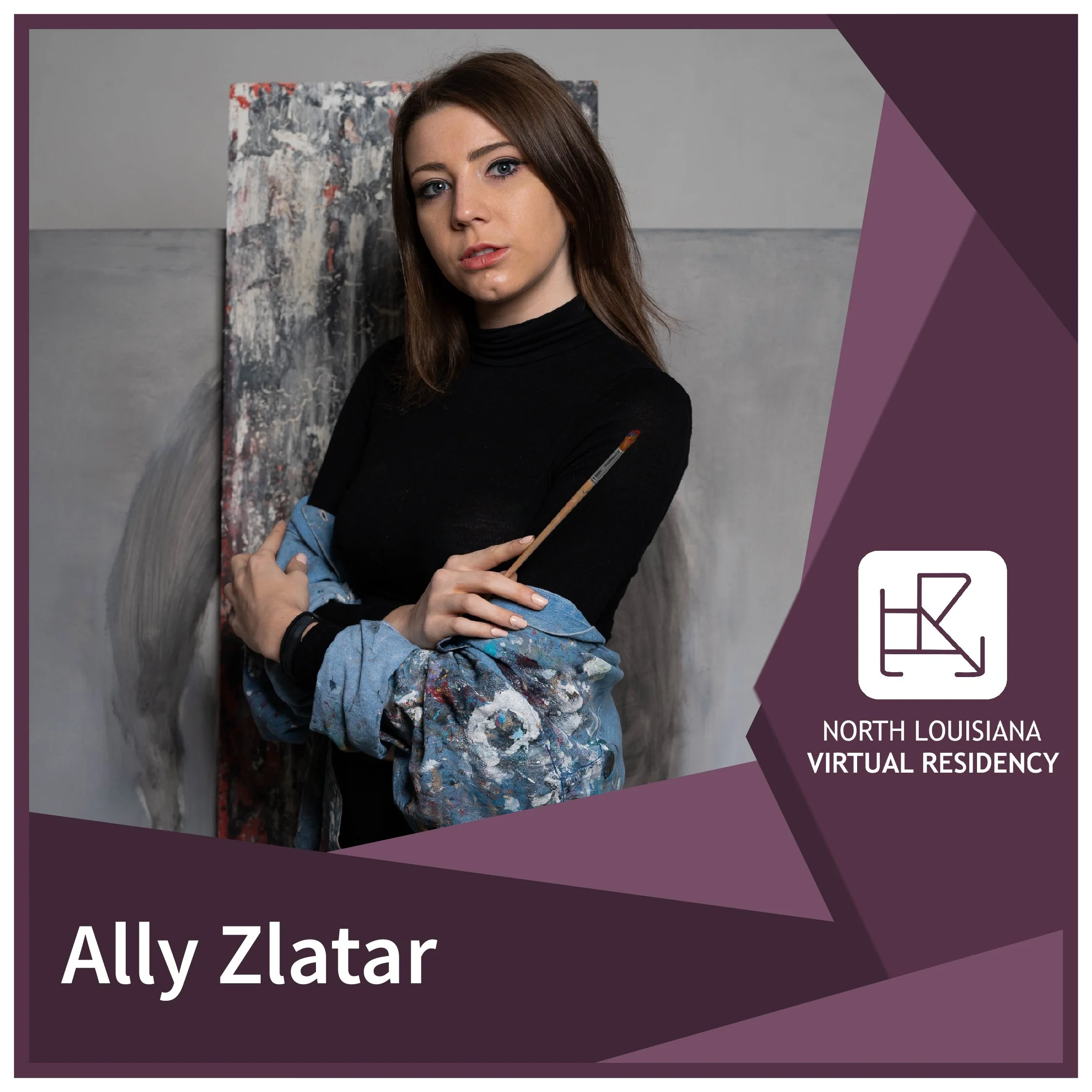
Ally Zlatar
Zlatar examines, instigates and provokes notions of the individual experience through focusing on the themes of illness, vulnerability, and authenticity of one’s lived-in experience. She utilizes an autoethnographic approach to her contemporary figurative painting. Zlatar explores her personal narratives and life experiences to guide her exploration of self-identity and self-perception in our modern discourse. She acknowledges power within the un-well body and believes there is tremendous value and potency by examining it through the contemporary art lens. She is a Lecturer at the University of Glasgow (GIC) and is pursuing her Doctorate of Creative Arts with the University of Southern Queensland. She has been involved in many exhibition creations and personal works shown globally. In her artistic practice, she is continuously interpreting, communicating and facilitating her work to make a difference in society.
This residency was such an enriching experience. For myself, the collaboration fostered this kinship between Ayesha and I despite never actually meeting in person. We formed a strong bond as two female artists that had such a profound exchange of cultures, bodies and narratives. This experience has redefined the way I perceive myself and my cultural heritage through this collaboration, but also through my dialogue and exploration with Ayesha, it has helped foster a new passion for cultural exchange and want to further continue this engage with other artists going forward.
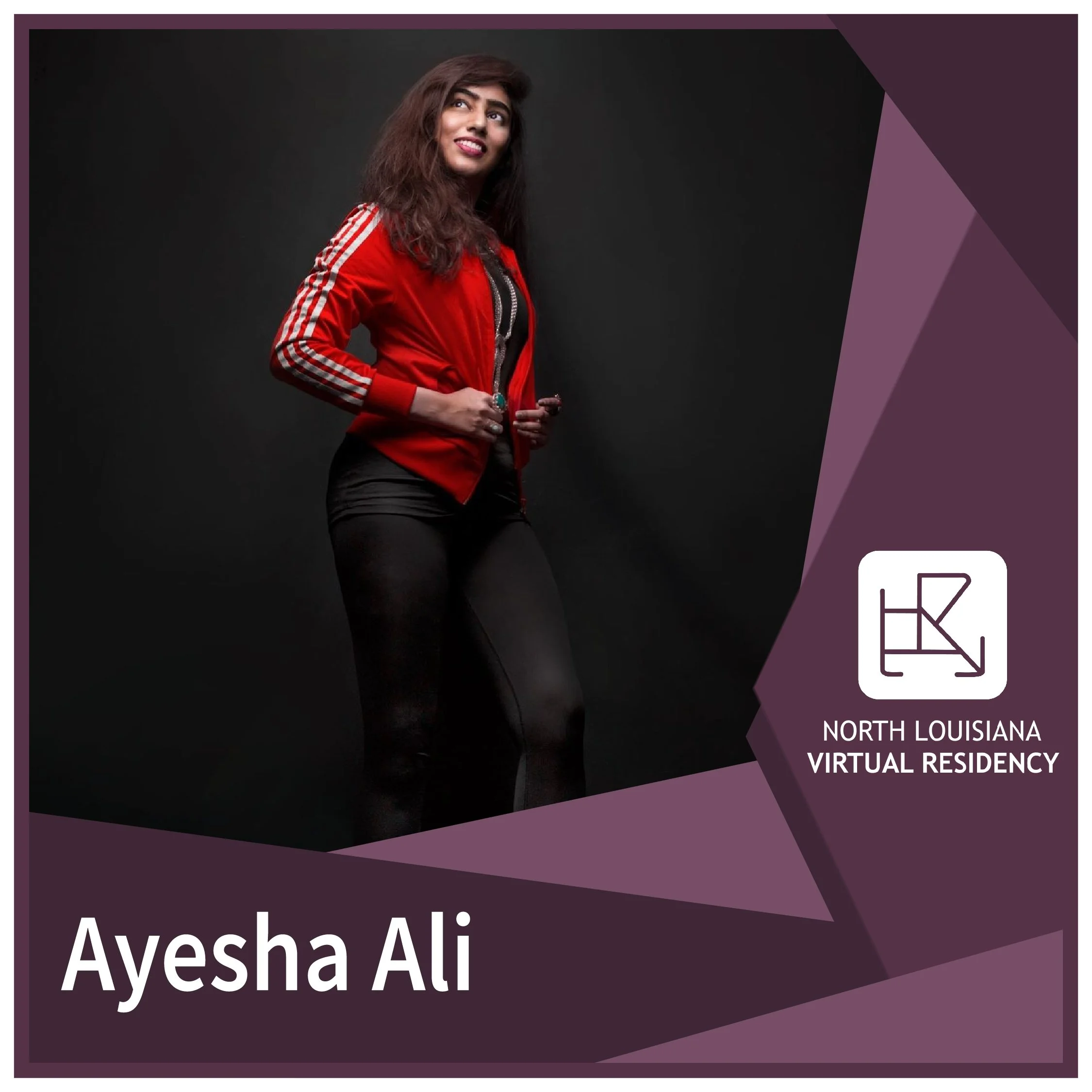
Ayesha Ali
Ali's practice engages with the blurred boundaries that arise between the concepts of reality, illusions, collective memory, scrutiny, and gender roles exhibited and masqueraded in pop culture. The idea of ‘projected truth’ can be understood through the language of costumes and jewellery as a medium to respond to the observed/transforming culture that we are a part of. The visuals and facial jewellery designs stem from my interpretation of how facial recognition algorithms embedded in social media applications identify, intrude, and scrutinize people’s everyday lives. Fantastical, imagined, and hyperreal characters in my work represent the distorted truth while simultaneously attempting a mutiny in the face of the camera lens. The question ‘What is self?’ remains lost somewhere in the reflection of the ‘other’. It becomes crucial to dissect this web of complex visibility patterns concerning the ideas of simulation, where this curated ‘self’ becomes another way to vicariously live out an alternate narrative, however groundless in reality.